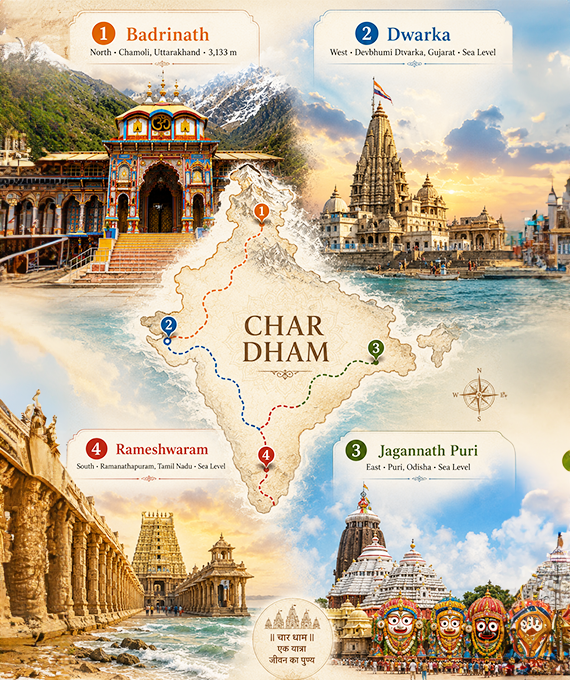
What exactly is the Char Dham Yatra?+
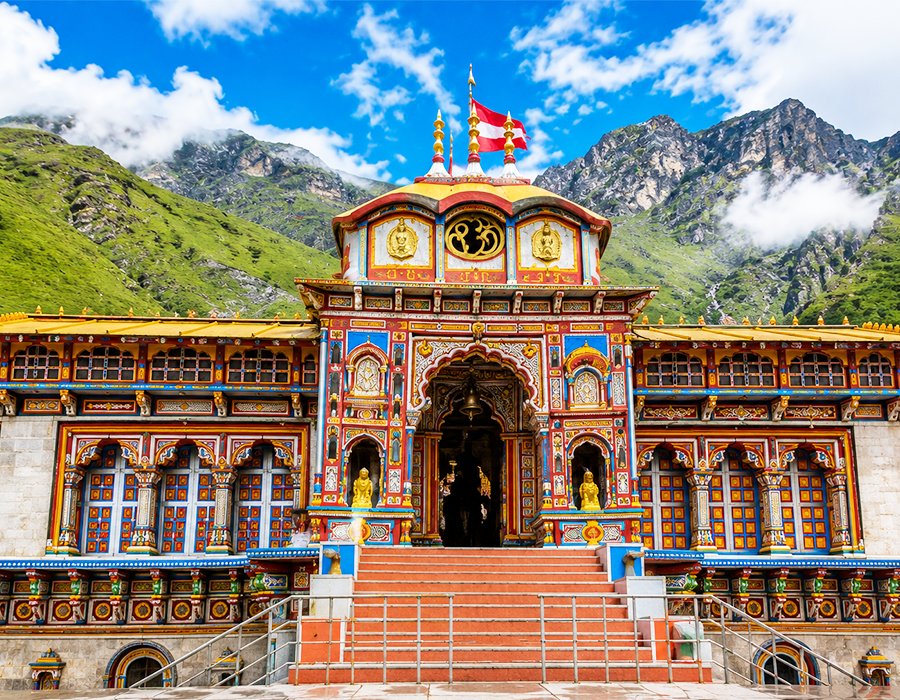
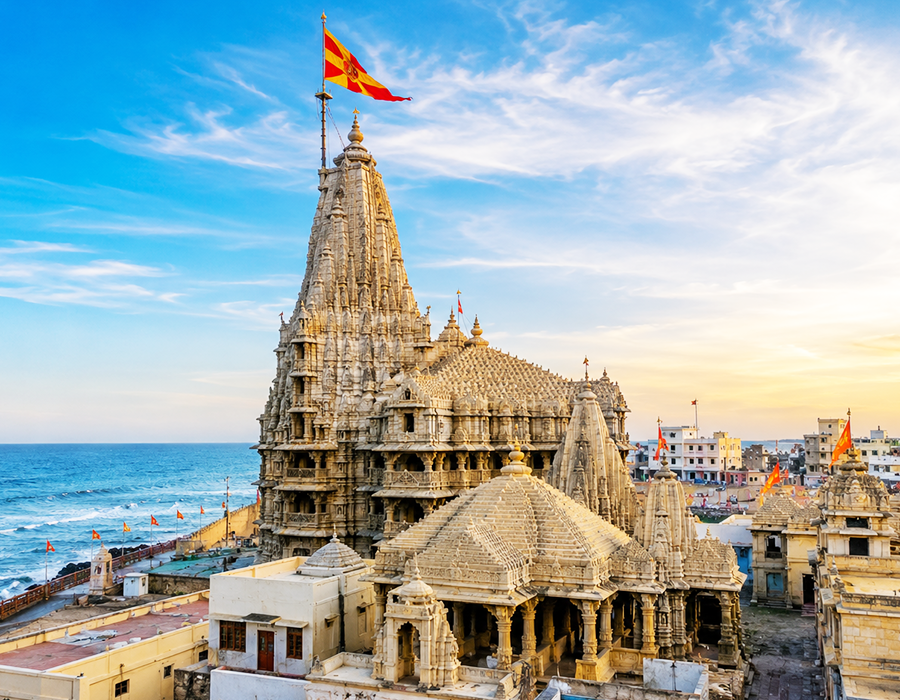
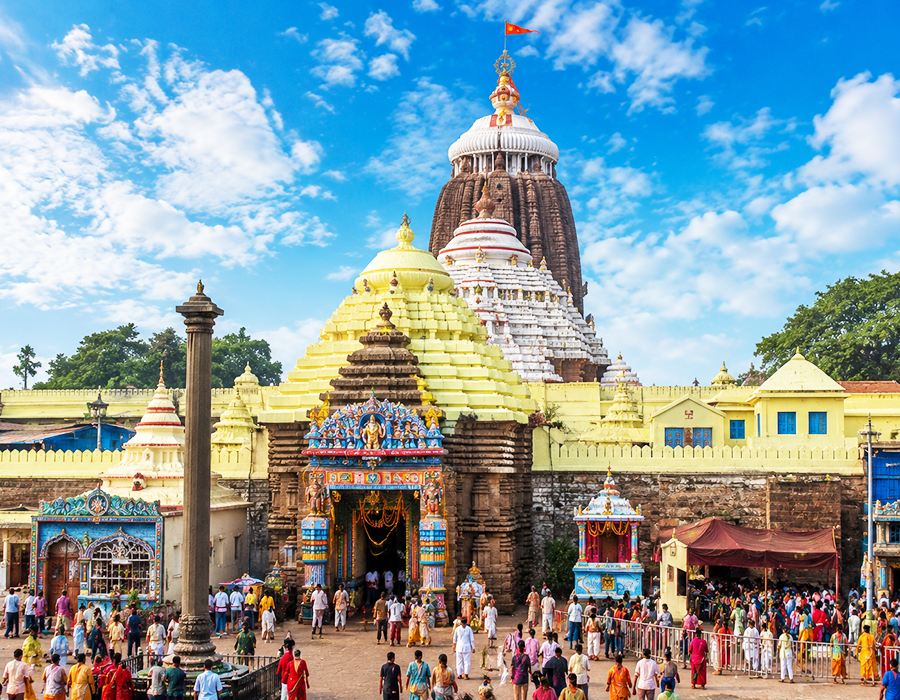
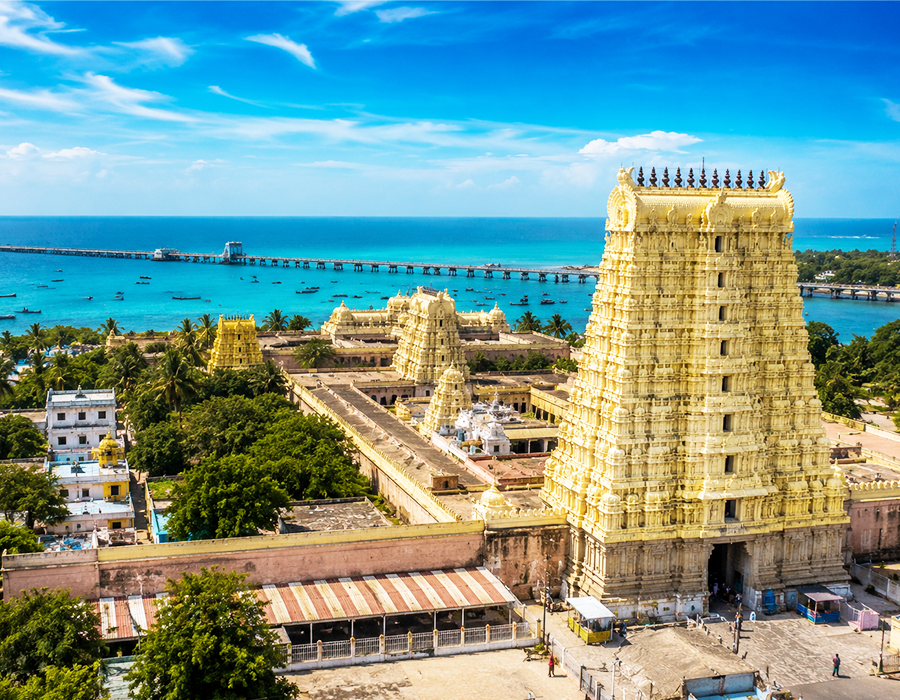
The Char Dham Yatra is the original pan-India pilgrimage established by Adi Shankaracharya in the 8th century CE. It covers four sacred shrines that anchor the four geographical corners of India — Badrinath (North - Uttarakhand), Dwarka (West - Gujarat), Jagannath Puri (East - Odisha), and Rameshwaram (South - Tamil Nadu). Together they form a sacred quadrilateral that spiritually unifies the Indian subcontinent.
What is the difference between Char Dham and Chota Char Dham?+
The original Char Dham covers four corners of India — Badrinath, Dwarka, Jagannath Puri, and Rameshwaram. It was established by Adi Shankaracharya. The Chota Char Dham is a regional Himalayan circuit within Uttarakhand — Yamunotri, Gangotri, Kedarnath, and Badrinath. The word "Chota" (small) was added in the 20th century to distinguish it. Badrinath is unique — it appears in both yatras.
Why are prices not shown on the website?+
Char Dham pricing varies based on your departure city, travel dates, group size, chosen hotel category, and whether you opt for direct multi-city flights or train + flight combinations. Since the yatra spans approximately 9,000 km across India, flight routing and seasonal hotel rates significantly impact total cost. We customize each quote to give you the most accurate pricing.
When is the best time to do the Char Dham Yatra?+
The best window is April to June and September to October. April-June covers all four dhams comfortably. October-March is ideal for the three southern/eastern dhams but Badrinath remains closed November to April due to Himalayan snowfall. The traditional ideal is May-June when all four are accessible and weather is pleasant across India.
How many days are required for the complete yatra?+
Minimum: 12 days. Recommended: 14-15 days for comfortable pace. Luxury: 18-21 days with rest days. Day breakdown: Badrinath (2-3 days), Dwarka (2 days), Jagannath Puri (2-3 days), Rameshwaram (2 days), plus travel/connection days between cities. We don’t recommend rushing this yatra in less than 12 days as it diminishes the spiritual experience.
Why is Badrinath in both Char Dhams?+
Badrinath holds a rare distinction: it is geographically the northernmost dham of India (qualifying it for the All-India Char Dham established by Adi Shankaracharya) AND it lies within the Garhwal Himalayas of Uttarakhand (qualifying it for the Chota Char Dham regional circuit). Lord Vishnu, who meditates here as Badri Vishal, is honoured in both contexts.
What is the correct sequence to visit the four dhams?+
The traditional clockwise sequence following Adi Shankaracharya’s direction is: Badrinath (North) → Puri (East) → Rameshwaram (South) → Dwarka (West). However, due to modern flight connectivity, practical sequences are followed based on routing efficiency. Many pilgrims now follow: Badrinath → Dwarka → Puri → Rameshwaram, which optimizes flight connections.
Can non-Hindus enter all four dhams?+
This varies by dham: Badrinath, Dwarka, and Rameshwaram — open to all visitors. Jagannath Puri — entry is strictly restricted to Hindus only (this is a centuries-old temple rule we cannot override). Non-Hindu visitors can view the temple from the Raghunandan Library rooftop nearby. For mixed groups, we plan alternative arrangements at Puri.
What is the Mahaprasad at Puri Jagannath?+
Mahaprasad at Puri is considered the holiest temple food in India — cooked daily in earthen pots in the temple kitchen (Ananda Bazaar — the world’s largest temple kitchen). It comprises 56 items including rice, dal, vegetables, and sweets. Once offered to Lord Jagannath, it is called Mahaprasad and is believed to never spoil. Hindu tradition holds it impossible to refuse this divine food. We arrange Mahaprasad seating for all our pilgrims.
What are the 22 Theerthams at Rameshwaram?+
The Ramanathaswamy Temple at Rameshwaram has 22 sacred wells (theerthams) within its precincts, each believed to have unique healing properties. Pilgrims traditionally bathe in all 22 before darshan — each well cleanses different sins and grants different blessings. Water from each is poured over the pilgrim’s head by the temple priests. The whole ritual takes about 1-2 hours. It’s included in all our packages.
What about flights between the dhams?+
Multi-city flight routing is included in Standard and Premium packages. Typical routing: Home City → Delhi → Dehradun (for Badrinath) → Ahmedabad/Jamnagar (for Dwarka) → Bhubaneswar (for Puri) → Madurai (for Rameshwaram) → Home City. We secure best fares through advance bookings and consolidator rates from major airlines like IndiGo, Vistara, and Air India.
Is the yatra suitable for senior citizens?+
Yes, the Char Dham yatra is more senior-friendly than the Chota Char Dham as there are no major treks (except optional Mana village walk at Badrinath). All temples are road-accessible. We provide wheelchair support, priority boarding, ground-floor rooms, slow-paced itineraries, and doctor-on-call. Medical fitness certificate is recommended for those above 75 years.
Can I do the yatra in parts over multiple years?+
Absolutely. Many devotees do "Do Dham" packages — for example, Badrinath + Dwarka in one trip, and Puri + Rameshwaram in another. We offer flexible Do Dham packages of 6-8 days each. While the traditional belief is to complete all four in one journey, doing it in parts is also spiritually valid.
Do you arrange special pujas at each dham?+
Yes. At Badrinath: Tapt Kund bath + Abhishek puja. At Dwarka: Mangala Aarti at sunrise + Gomti Ghat snan. At Puri: Mahaprasad arrangement + Sandhya Aarti. At Rameshwaram: 22 Theertham bath + Sphatika Lingam darshan. Premium packages include private panditji and personal puja at each dham. Custom pujas (Rudrabhishek, Shanti Path, etc.) can be arranged at additional cost.
Is dress code mandatory at all dhams?+
Yes, traditional Indian attire is mandatory: Rameshwaram — Veshti/dhoti for men, saree/salwar for women (compulsory). Puri Jagannath — traditional attire strictly enforced. Dwarka & Badrinath — modest Indian clothing preferred. We provide a detailed dress code guide and emergency dhotis at Rameshwaram if needed. No leather items (belts, wallets) inside any temple.
What is the cancellation and refund policy?+
30+ days before travel: 90% refund. 15-29 days: 70% refund. 7-14 days: 50% refund. Under 7 days: 25% refund. Flight cancellation charges apply as per airline policy. In case of natural calamities, pandemic restrictions, or government travel advisories, we offer full rescheduling at no extra cost. All refunds processed within 7-10 working days.
Can the yatra be customized for our family or group?+
Absolutely! We specialize in customized group, family, and corporate Char Dham packages. Whether you’re 2 people or 50+, we tailor the itinerary, accommodation, multi-city flights, meal preferences, special pujas, and even doctor/priest accompaniment. Share your specific requirements via the enquiry form for a custom quote within 30 minutes.
What documents are required for the yatra?+
Required documents: (1) Original Government Photo ID (Aadhaar, PAN, Passport, Driving License — any two), (2) 2 passport-size photographs per traveller, (3) Medical fitness certificate for travellers above 75 years, (4) Foreign nationals must carry passport, visa, and FRRO registration if applicable. We handle all temple registration formalities for you.